
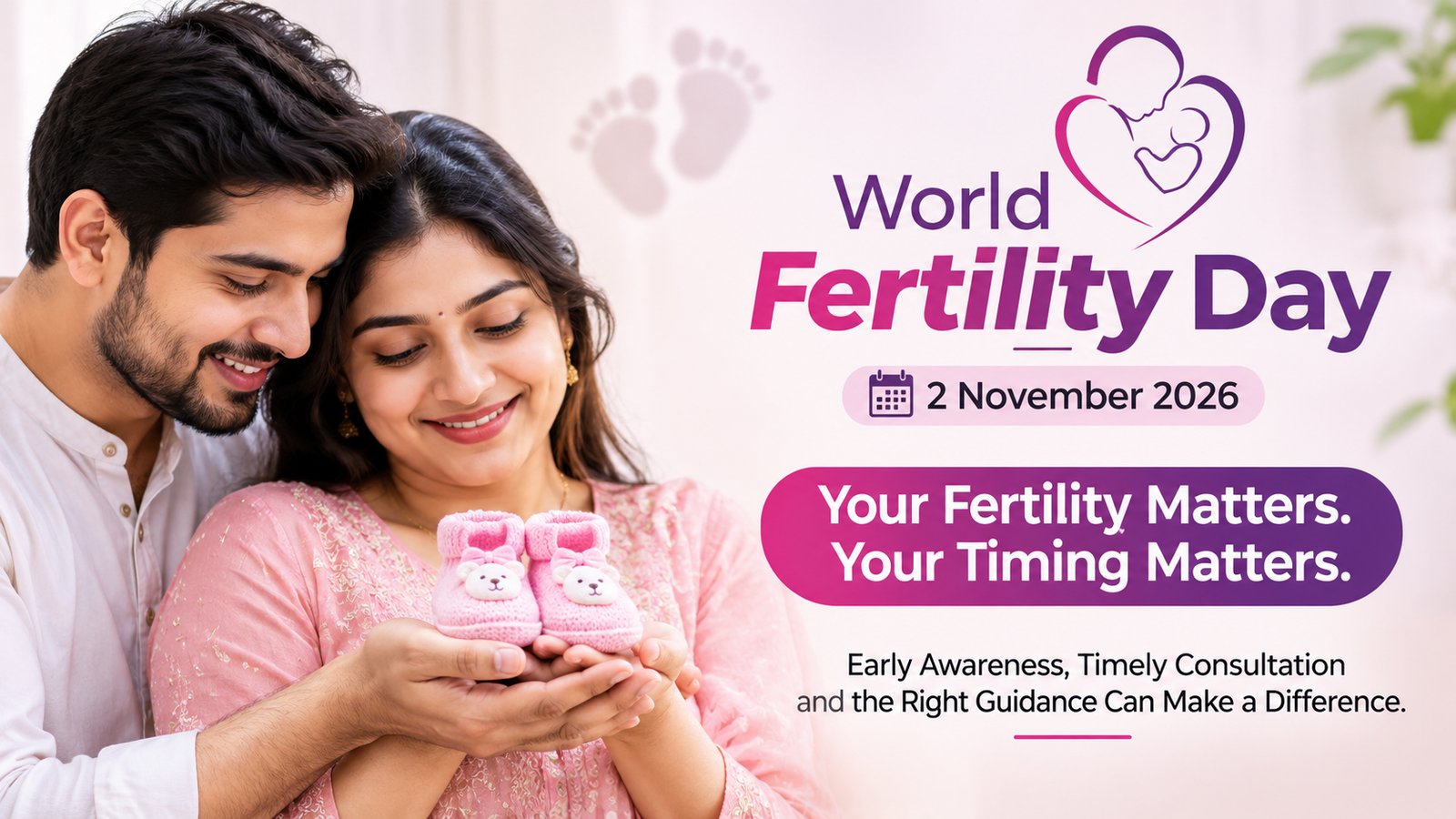
Early Awareness, Timely Consultation and the Right Guidance Can Make a Difference.
Every journey toward parenthood begins with hope. For some couples, pregnancy happens naturally without difficulty, while for others, the journey may involve unanswered questions, emotional challenges and medical concerns.
World Fertility Day, observed on November 2, is an opportunity to raise awareness about reproductive health, infertility, fertility testing and the importance of timely medical guidance.
The message for World Fertility Day 2026 is simple but meaningful:
Your Fertility Matters. Your Timing Matters.
Understanding reproductive health today can help individuals and couples make informed decisions about their fertility and future family planning.
What Is Fertility and Why Is Fertility Awareness Important?
Fertility refers to the natural ability to conceive and reproduce. Both male and female reproductive health play essential roles in achieving pregnancy.
However, fertility is influenced by several factors, including age, hormonal balance, reproductive conditions, lifestyle and overall health.
Fertility awareness helps people understand their reproductive health, identify possible concerns and seek appropriate medical guidance when needed.
Being aware of your fertility does not mean every individual needs extensive medical testing. Instead, it means knowing when to ask questions, when to seek advice and how to make informed choices.
Infertility Is More Common Than Many People Realize
Infertility is a reproductive health condition that affects millions of individuals and couples worldwide.
According to the World Health Organization (WHO), approximately one in six people of reproductive age experience infertility during their lifetime.
Infertility is commonly defined as the inability to achieve pregnancy after 12 months or more of regular, unprotected sexual intercourse.
It is important to understand that infertility may involve female factors, male factors, a combination of both or unexplained causes.
Therefore, fertility concerns should never automatically be attributed to women alone.
Why Timing Matters in Your Fertility Journey
Age is an important factor influencing reproductive potential, particularly female fertility.
As women grow older, the number and quality of available eggs generally decrease. This can affect the chances of natural conception.
Male fertility may also be affected by age, health conditions and lifestyle factors.
Understanding age-related fertility changes allows individuals and couples to make more informed decisions about pregnancy planning.
When Should You Consult a Fertility Specialist?
A fertility consultation is generally recommended:
Under 35 years: After 12 months of regular, unprotected intercourse without pregnancy.
Age 35 or older: After 6 months without pregnancy.
Over 40 years: Consider more immediate fertility evaluation.
At any age: Seek earlier medical advice if there are known reproductive health concerns, irregular menstrual cycles, suspected endometriosis or other fertility-related medical conditions.
These recommendations help ensure that potential fertility concerns are identified without unnecessary delays.
Common Causes of Infertility in Women
Female infertility can be associated with several reproductive and hormonal conditions.
1. Polycystic Ovary Syndrome (PCOS)
PCOS is a hormonal condition that may interfere with regular ovulation. Women with PCOS may experience irregular menstrual cycles and difficulty conceiving.
2. Blocked Fallopian Tubes
The fallopian tubes play an essential role in natural fertilization. Blockages or damage can prevent the egg and sperm from meeting.
3. Endometriosis
Endometriosis occurs when tissue similar to the uterine lining grows outside the uterus. It may contribute to pelvic pain and fertility difficulties.
4. Ovulation Disorders
Irregular or absent ovulation may reduce the chances of conception. Hormonal conditions, including certain thyroid disorders, may affect ovulation.
5. Age-Related Fertility Changes
As reproductive age increases, changes in egg quantity and quality may make conception more difficult.
Identifying the underlying cause is essential for determining an appropriate treatment approach.
Male Fertility Matters Too
Fertility awareness is equally important for men.
Male infertility may be associated with low sperm count, reduced sperm movement, abnormal sperm shape, hormonal problems, varicocele or certain medical conditions.
A semen analysis is often an important part of a fertility evaluation.
Both partners may need assessment because identifying male and female fertility factors together can support a more complete diagnosis.
Fertility Tests: Understanding Your Reproductive Health
Fertility specialists may recommend different investigations depending on medical history, age, symptoms and the duration of unsuccessful attempts to conceive.
Common fertility investigations include:
Fertility Tests for Women
AMH Test: Helps estimate ovarian reserve and may assist in fertility treatment planning. It does not independently determine whether a woman can conceive naturally.
Hormonal Evaluation: Selected hormone tests may be recommended when menstrual or ovulation problems are suspected.
Pelvic Ultrasound: Helps assess the uterus and ovaries and identify certain reproductive conditions.
Ovulation Assessment: May help determine whether ovulation is occurring regularly.
HSG Test: A specialized investigation that may be recommended to assess whether the fallopian tubes are open.
Fertility Tests for Men
Semen Analysis: Evaluates sperm concentration, movement and shape.
Additional hormone tests or specialist investigations may be advised if initial findings suggest a problem.
Not every patient requires every test. A fertility specialist can recommend appropriate investigations based on individual needs.
Can Lifestyle Choices Influence Fertility?
Certain lifestyle factors can affect reproductive health in both men and women.
Healthy habits may support overall reproductive wellbeing.
Consider these practical steps:
Maintain a balanced, nutritious diet.
Aim for a healthy body weight.
Stay physically active through regular exercise.
Avoid smoking and tobacco products.
Limit or avoid alcohol, particularly when planning pregnancy.
Prioritize adequate sleep and emotional wellbeing.
Manage existing medical conditions with professional guidance.
Discuss preconception care and folic acid supplementation with a healthcare professional.
Although lifestyle improvements may support reproductive health, they cannot correct every cause of infertility. Medical evaluation remains important when indicated.
Understanding Fertility Treatment Options
Fertility treatment depends on the underlying cause of infertility, age, medical history and individual circumstances.
Different approaches may be recommended.
Ovulation Induction
Medication may be used under medical supervision to support ovulation in women with certain ovulatory disorders.
Intrauterine Insemination (IUI)
IUI involves placing prepared sperm directly into the uterus around the time of ovulation. It may be suitable for selected fertility conditions.
In Vitro Fertilization (IVF)
IVF is an assisted reproductive technology in which eggs are fertilized with sperm in a laboratory. An embryo may then be transferred into the uterus.
Intracytoplasmic Sperm Injection (ICSI)
ICSI is a specialized laboratory technique in which a single sperm is injected into an egg. It may be considered in certain cases, including some male-factor fertility problems.
Not every couple experiencing infertility requires IVF. Appropriate treatment should be selected only after a comprehensive medical assessment.
The Emotional Side of the Fertility Journey
Fertility difficulties can affect emotional wellbeing, relationships and confidence.
Repeated pregnancy tests, unexpected diagnoses and uncertainty about treatment can create stress and disappointment.
It is important for individuals and couples to recognize that fertility problems are medical concerns, not personal failures.
Open communication, emotional support and professional counselling may help people cope with the challenges of fertility care.
Every fertility journey is different, and no two individuals or couples have exactly the same experience.
World Fertility Day 2026: Awareness Is the First Step
World Fertility Day is not only about infertility treatment. It is about encouraging conversations around reproductive health, addressing misconceptions and helping people access reliable information.
This World Fertility Day, remember:
Your Fertility Matters. Your Timing Matters.
Early awareness, appropriate fertility evaluation and timely consultation can make a meaningful difference in reproductive healthcare.
If you have questions about pregnancy planning, menstrual irregularities, male fertility or difficulty conceiving, consider speaking with a qualified fertility specialist.
The right information today can help you make informed choices for tomorrow.
Frequently Asked Questions About Fertility
1. When is World Fertility Day celebrated?
World Fertility Day is observed on November 2 to promote awareness of fertility, infertility and reproductive health.
2. When should I consult a fertility specialist?
If you are under 35 and have not conceived after 12 months of regular, unprotected intercourse, consider a fertility evaluation. If you are 35 or older, evaluation is generally recommended after six months. Certain medical conditions warrant earlier consultation.
3. Can PCOS affect pregnancy?
Yes. PCOS may affect ovulation and make conception more difficult for some women. However, many women with PCOS can conceive naturally or with appropriate treatment.
4. Can men experience infertility?
Yes. Male fertility factors, including sperm count, movement and reproductive health conditions, can contribute to infertility.
5. Does every infertility case require IVF?
No. Treatment depends on the underlying condition. Some people may benefit from medical treatment, ovulation management, IUI or other approaches, while others may require IVF.
6. Can AMH testing confirm whether I can become pregnant?
No. AMH provides information about ovarian reserve but cannot, by itself, predict natural pregnancy or diagnose infertility.
7. Why is early fertility awareness important?
Early awareness helps individuals recognize reproductive concerns, understand age-related changes and access medical advice at an appropriate time.
Take the First Step Towards Understanding Your Fertility
Your reproductive health deserves attention at every stage of life.
Whether you are planning a pregnancy, experiencing difficulty conceiving or simply want to understand your fertility better, professional guidance can help you explore suitable options.
World Fertility Day 2026
Your Fertility Matters. Your Timing Matters.
Early Awareness, Timely Consultation and the Right Guidance Can Make a Difference.
Consult a qualified fertility specialist for personalized reproductive healthcare and fertility guidance.
Medical Disclaimer: This article is for general educational purposes only and is not a substitute for individualized medical advice, diagnosis or treatment.